Liquid (Dye) Penetrant Inspection
Reveal Hidden Surface Defects
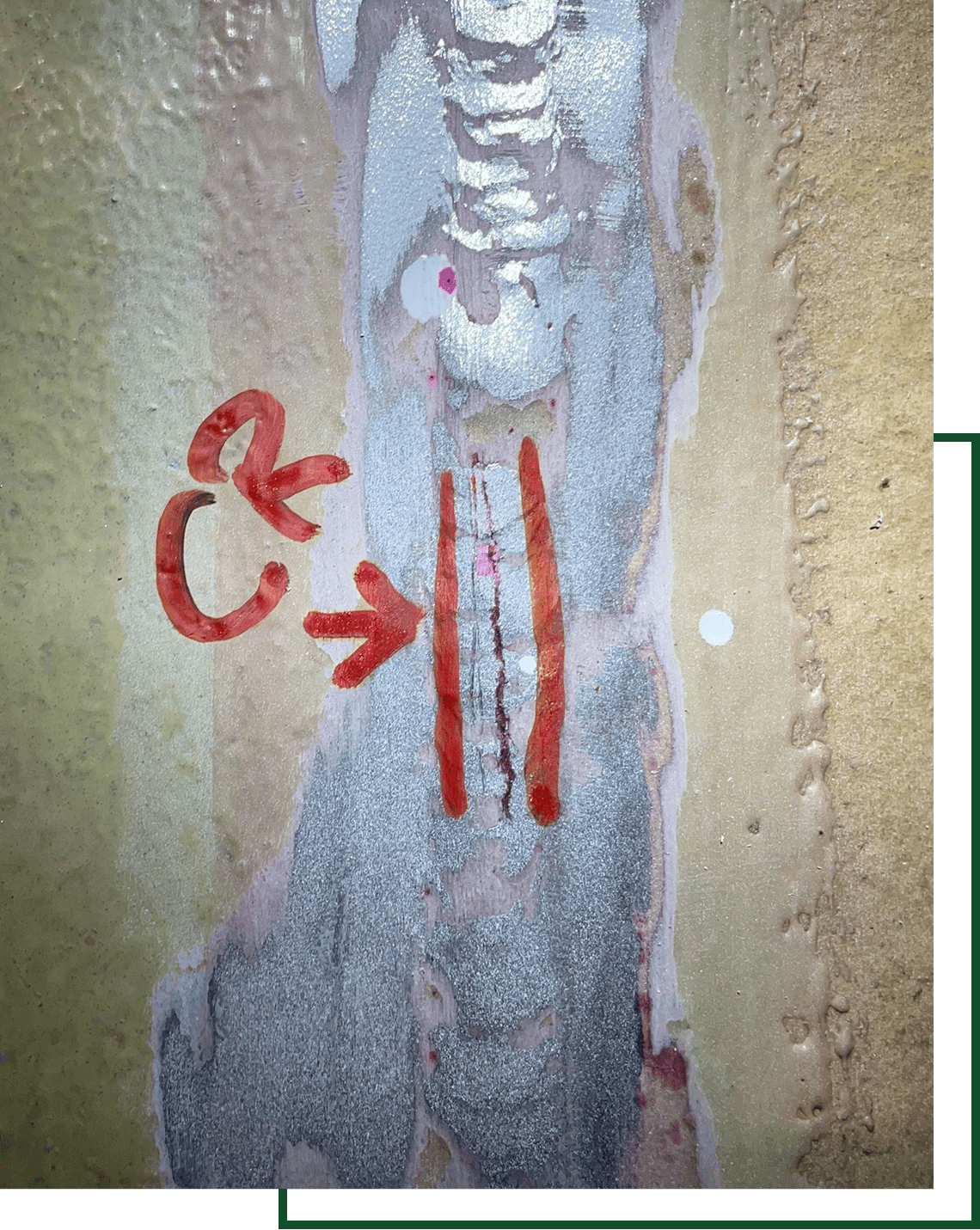
Liquid penetrant testing (LPT), also called dye penetrant testing, is a non-destructive testing (NDT) method used to detect surface-breaking defects in non-porous materials. The process begins by thoroughly cleaning the part to remove dirt, oil, or contaminants. A liquid penetrant—either visible red dye or fluorescent—is then applied to the surface and allowed to sit for a set dwell time. During this time, the penetrant seeps into any cracks or surface flaws through capillary action. After the excess penetrant is carefully removed from the surface, a developer is applied to draw the trapped penetrant back out of the defects, making them visible.
Under proper lighting (white light for visible dye or ultraviolet light for fluorescent penetrant), defects such as cracks, laps, or porosity appear as clear indications on the surface. LPT is widely used in industries like aerospace, manufacturing, and automotive to inspect welds, castings, and machined parts. It is relatively simple, inexpensive, and effective for detecting very small surface defects. However, it can only reveal flaws that are open to the surface and requires careful cleaning and preparation to ensure accurate results.
Improve Surface Integrity Assurance
Connect with us for reliable testing solutions. Request our service today.