Ultrasonic Thickness Testing
Accurate Measurements for Long-Term Safety
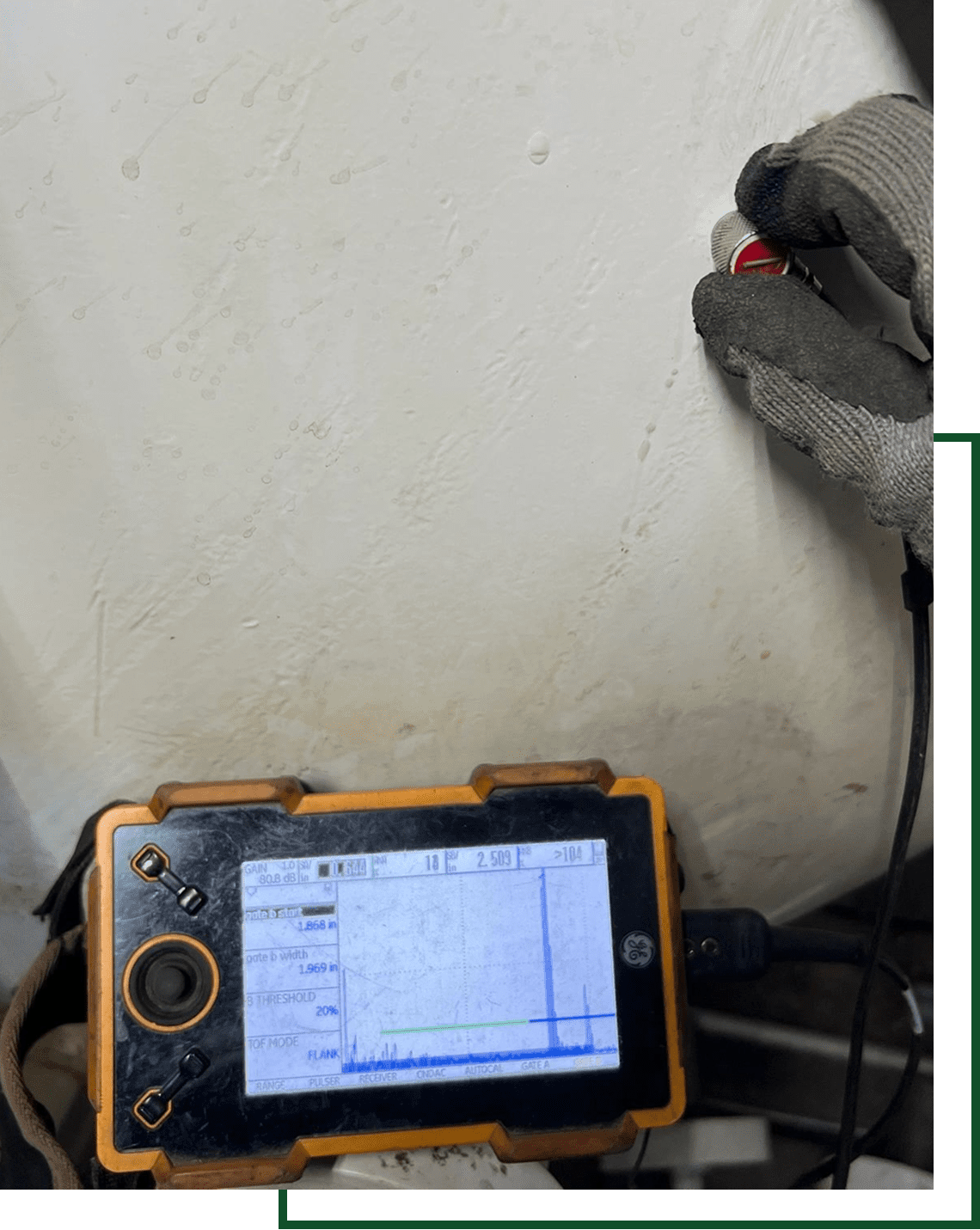
Ultrasonic testing (UT) is a non-destructive testing (NDT) method that uses high-frequency sound waves to inspect materials for internal flaws or to measure thickness. A device called a transducer generates ultrasonic pulses and sends them into the material being tested. These sound waves travel through the material until they encounter a boundary, such as a crack, inclusion, or the back wall of the part. When they hit a boundary, part of the wave reflects back to the transducer.
The returned sound waves are converted into electrical signals and displayed on a screen, usually as a waveform. By analyzing the time it takes for the echoes to return and the strength of the signals, an inspector can determine the depth, size, and possible type of defect. A coupling agent, such as gel or water, is typically applied between the transducer and the test surface to help transmit the sound waves efficiently into the material.
Ultrasonic testing is commonly used in industries like oil and gas, aerospace, manufacturing, and construction to inspect welds, pipelines, structural components, and pressure vessels. It is capable of detecting both surface and deep internal defects, even in thick materials. UT is safe because it does not involve radiation, but it does require trained technicians and proper calibration to ensure accurate and reliable results.
Stay Ahead of Equipment Wear
Trust us for reliable ultrasonic thickness testing that supports proactive maintenance. Contact us today.